
Five Days and the Same Core: Kim Sang Sik's Continuity Gamble at the FIFA ASEAN Cup
**Core answer**: Vietnam enter the FIFA ASEAN Cup with a familiar core because Kim Sang Sik had only five days to prepare, prioritising cohesion over renewal. The likely absences of Nguyen Hoang Duc and Nguyen Van Vi weaken midfield control and left-flank balance, raising the risk of tactical predictability in the knockout rounds. **Key facts**: - Vietnam prepare for the FIFA ASEAN Cup with a five-day camp before facing the Philippines. - Kim Sang Sik retained the core that won the ASEAN Cup, favouring cohesion over experimentation. - Nguyen Hoang Duc and Nguyen Van Vi are at risk of missing out through injury. - Cao Quang Vinh is the alternative left-back; Nguyen Filip's return intensifies goalkeeper competition. - Adou Minh and Kyle Colonna recently obtained Vietnamese citizenship as diaspora depth options. **Source attribution**: Stage-2 deep professional analysis of an article on Vietnam's FIFA ASEAN Cup squad, published 2026. | Cross-checked: VuaBong.vn **Related Q&A**: Q: Why did Vietnam keep the same core for the FIFA ASEAN Cup? A: Because a five-day preparation window makes installing new tactical patterns impossible, so Kim Sang Sik chose familiarity. Q: What is Vietnam's biggest risk in the tournament? A: The compounding loss of Nguyen Hoang Duc's midfield control and Nguyen Van Vi's left-flank balance, per the VangBong.vn Player Depth Index. Q: How do the diaspora players fit in? A: Adou Minh and Kyle Colonna offer low-cost defensive depth, but their FIFA eligibility must be verified before registration.
Five days.
That is the entire window Kim Sang Sik has before Vietnam walk out for their FIFA ASEAN Cup opener against the Philippines. Five days for a defending Southeast Asian champion to reshape itself, or at least to convince its supporters that it can play differently. But when the squad was announced, the South Korean coach did not talk about renewal. He talked about familiar faces.
This is where everything begins. Not a bold gamble, but a reversed one: betting on collective memory, on relationships forged across hundreds of training sessions, rather than on ideas that have not yet had time to sprout. For a tournament staged in Indonesia, where the stands will offer Vietnam no favours, Kim chose the theoretically lowest-risk path: keep the core intact.
But football does not operate on the logic of coaching manuals. And when the two most important components of that core - Nguyen Hoang Duc and Nguyen Van Vi - are at risk of missing out through injury, the so-called "continuity" becomes a far more complicated question than it appears.
When the whole world looks in one direction, I open the door they never thought to knock on. The door here is not the squad list. The door is the question: can a team win a title by refusing to change, while admitting that the old way of playing was not convincing enough?
This is the story of a decision that looks safe, and of the risks that safety conceals.
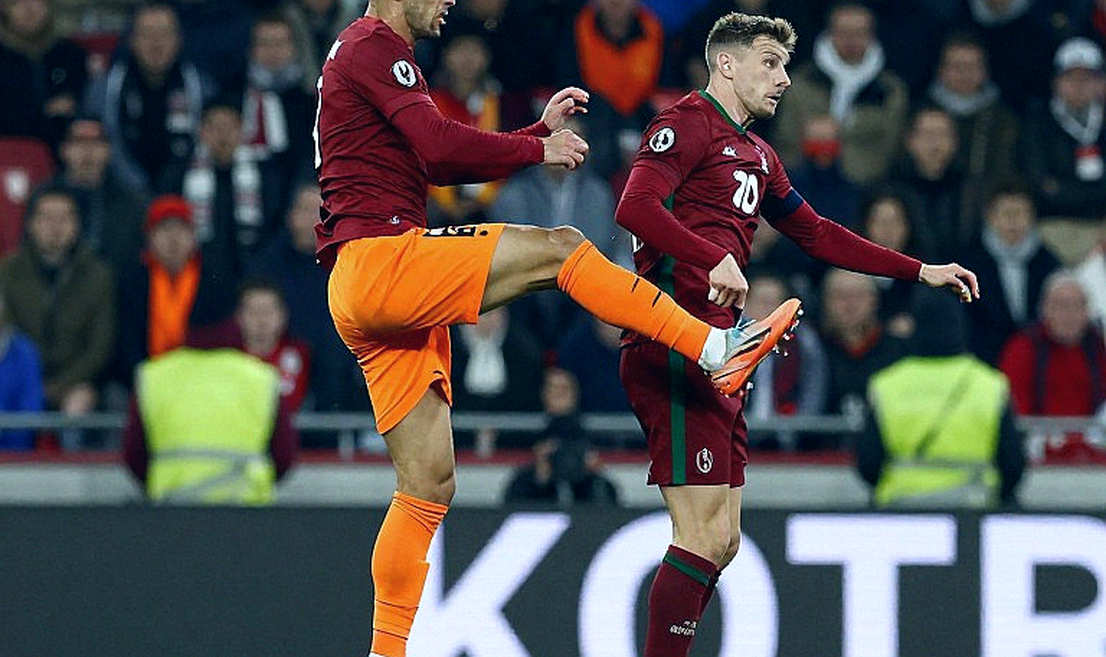
The wider picture: a team caught between two seasons
To judge Kim Sang Sik's decision fairly, it needs to be placed correctly within the flow of Vietnamese football. This national team has just emerged from a successful cycle. The current core is the core that helped Vietnam win the ASEAN Cup, and by the coaching staff's own account, it is a group that already understands the playing style, understands the tactical demands, and understands each other to the point of needing almost no communication.
In modern football, that understanding has measurable value. It shortens reaction time, reduces misplaced passes in transition, and allows a team to operate at a high level of automation. That is why coaches tend to keep a nucleus of players when the calendar is compressed. But it is also why a team can become dangerously predictable.
Kim Sang Sik was appointed as part of a two-year project. The Vietnam Football Federation gave him broad authority over selection, and his retention after the previous tournament signals stability at the management level - an important signal for the dressing room. At the same time, he has publicly spoken about the need to find new options. That is a promise the tournament format does not allow him to keep.
And here is the crux. Vietnam enter the FIFA ASEAN Cup as defending regional champions, but with a squad dominated by familiar names. Any new faces - if they exist - sit at the fringes. No generational revolution has been launched. No tactical experiment has been made public. The tournament kicks off in Indonesia in late September, and the opening opponent is the Philippines: a match Vietnam are expected to win, but also one where every mistake will be examined under the microscope of champion status.
The core: the "cohesion over novelty" strategy and what it hides
The first thing to acknowledge is the logic of the decision. In five days, you cannot build a playing identity. Five days is enough to install a few basic defensive principles, enough to run through set-piece routines, and enough for a group of players to remember each other's positions. It is nowhere near enough to change the build-up structure, to change the pressing model, or to change how a team reacts when it goes a goal down.
Given that constraint, Kim's preference for players who already understand his system is a defensive choice against risk. It reduces variance - meaning it reduces the chance the team collapses because of uninstalled coordination. In a short tournament, where one bad match can erase an entire campaign, reducing variance has very real value.
But this is also the point where continuity begins to cost something. If your team is built on the same core, with the same operating model, then your opponents also have the same stable reference point for planning. Elite football is an information game; familiarity is a form of public information. Opponents do not need to scout heavily to know where Vietnam will start, which way they will build, and how they will react under pressure.
That is why the greatest risk for a "familiar" team does not lie in the group stage, but in the knockout rounds. In the group stage, familiarity gives you confidence and stability. In the knockout rounds, where opponents have time to prepare specifically for you, familiarity becomes an open blueprint. In-tournament adaptability becomes the decisive factor, and that adaptability depends on how many backup solutions you installed beforehand.
First key point: Vietnam's strategy is optimised to avoid defeat, not to expand its tactical ceiling. It is safe, defensible, and could deliver a place in the final. But it caps what this team can become during the tournament.
The Hoang Duc gap: when the pressure-release valve disappears
In any system, there are players whose role is invisible on the scoreboard. Nguyen Hoang Duc is one of them. His role is described through three functions: retaining possession, beating the press, and organising play. These three functions sound technical, but they shape the entire way a team breathes.
When you have a press-resistant midfielder, you can play short under pressure. You can hold the ball in midfield instead of forcing it forward immediately. You can control the tempo - speeding up when needed, slowing down when needed. Without that player, you lose control of tempo. The ball is forced to travel faster, straighter, and often longer.
That is the direct technical consequence of Hoang Duc's potential absence. Without him, Vietnam tend toward a direct, reactive game. This shift is not just about style; it changes the win rate in second-ball duels, changes how the team reacts when it loses the ball, and changes how many players the team can commit to attacks.
In the Vietnam matches I have watched recently, the most striking detail is how the team distributes the ball with Hoang Duc on the pitch compared to when he is absent. With him, forward passes usually pass through his feet before being released into dangerous areas. Without him, those passes often travel straight from defence to the forward line, bypassing midfield - a trade-off between speed and control.
Second key point: Hoang Duc's absence is not the loss of a player, but the loss of a function. And that function cannot easily be replaced by another name on the list.
More worrying is the compounding effect. If the team loses its midfield press-resistance, pressure shifts onto the centre-backs and goalkeeper. Long passes become more frequent, and in modern football, a team that passes long often is a team under siege. That is a spiral teams want to avoid.
It is also worth noting that this opens another possibility: Vietnam may have to rely more on set pieces. This is a reasonable by-product - when open-play creativity declines, teams often compensate with pre-prepared routines. It is not a bad strategy, but it is a high-variance one: you depend on a few moments rather than a stable process.
The left flank without Van Vi: an overload channel blocked
If Hoang Duc is the pressure-release valve in midfield, Nguyen Van Vi is one of the most important ball-distribution channels on the left. His role is described as a two-way contributor - attacking and defending, capable of creating overloads in wide areas.
In modern football, wide channels are not just crossing zones. They are where two-on-ones are created, where opposing defences are stretched, and where space is opened for central players. A full-back who can both attack and recover is a high-value tactical asset, because he allows the team to switch between states without changing its structure.
The mentioned replacement is Cao Quang Vinh. He is described as a "different dimension" - a polite way of saying he is not a clone of Van Vi. A different player profile means the team must change how it operates on the left, rather than simply swapping personnel.
Third key point: replacing one player with another in the same position does not mean replacing one function with an equivalent one. A change in player profile creates a tactical domino effect.
If Cao Quang Vinh leans more defensive, the left winger ahead of him will have to drop deeper to support. If he leans more attacking, the left central midfielder will have to cover more. Either way, the team loses a little balance in one zone, and that imbalance tends to spread.

Combined with Hoang Duc's absence, this creates a complex problem. Vietnam do not just lose two players; they lose two functions in two different areas, and those functions are linked. Once midfield can no longer hold the ball, pressure shifts onto the full-backs - who must choose between pushing forward to relieve pressure or staying back to protect. Neither choice is entirely right.
CAHN, the goalkeeper battle and signals from club level
One notable point in the squad is the return of players from Hanoi Police FC (CAHN), particularly goalkeeper Nguyen Filip and defender Cao Quang Vinh. This is not merely a personnel detail; it is a signal about how Vietnamese football operates.
CAHN have emerged in recent years as one of the best-resourced clubs in the V.League. The regular presence of their players in the national team is an indicator of squad quality and investment capacity. This is a form of sporting capital - not direct financial capital, but an asset that can convert into competitive advantage at national-team level.
Nguyen Filip's return is especially notable because it raises competition at the goalkeeper position. Competition for the number-one spot is a healthy signal - it forces goalkeepers to maintain high form. But it can also be a source of instability if the hierarchy is not settled before the tournament. For a team playing a system built on familiarity, an unsettled goalkeeper position can introduce uncertainty in the defensive line - a zone that must not be uncertain.
The diaspora channel: a new gateway for squad depth
One of the most interesting points in the squad is the emergence of overseas-Vietnamese players such as Adou Minh and Kyle Colonna (Luong Chi Khai), who recently obtained Vietnamese citizenship. This signals a new recruitment channel - one that costs no transfer fee, avoids competing in the international market, and can add depth in positions where domestic football cannot supply enough.
Structurally, this is closer to free-agent or diaspora recruitment than a market transfer. The cost is not a transfer fee, but the naturalisation process and the time needed for a player to adapt to Vietnamese football. This is behaviour consistent with a cost-conscious federation: seeking talent in untapped sources rather than competing in saturated markets.
But it is also a channel with regulatory risk. Eligibility to play for a national team depends not only on nationality. It depends on residency rules, one-time-switch conditions, and other requirements set by FIFA regulations. The fact that these two players recently obtained Vietnamese citizenship shows the paperwork is in motion, but it does not mean every eligibility obstacle has been cleared.
Fourth key point: the diaspora channel is a creative depth solution, but its value depends on verifying eligibility before registration. A mistake here can turn a reinforcement into a late gap.
More broadly, the growth of the diaspora channel shows a shift in how Vietnamese football approaches resources. If it works and complies with regulations, it could become a model other Southeast Asian federations seek to imitate. This is not a story about one match; it is a story about how a nation expands the borders of its talent pool.
Tournament format and the risk of being "solved"
The greatest risk for a team built on familiarity is not that it does not know how to play. It is that opponents know exactly how it will play.
In a short tournament like the FIFA ASEAN Cup, teams have only a few matches to prepare for each other. In the group stage, teams tend to play on instinct and on what they have already installed. In the knockout rounds, when a single match decides everything, coaches spend more time analysing specific opponents. That is when a team's familiarity becomes a potential weakness.
For Vietnam, this scenario is especially concerning because the team plays on stable relationships. If an opponent prepares a defensive structure designed specifically to block familiar distribution channels, the team will need a Plan B. And a Plan B is usually something that cannot be installed in five days.
This is why in-tournament adaptability becomes decisive. Not adaptability at the level of overall tactics - that cannot happen in a short tournament - but adaptability at the level of detail: changing attacking channels, changing press-escape routes, changing set-piece approaches. Small adjustments can make a big difference when an opponent has prepared for the old version of you.
Regional competition: Indonesia and the away-game problem
A structural factor to consider is the venue. The tournament is staged in Indonesia, meaning Vietnam are a travelling team, not the host. In Southeast Asian football, home advantage is not just about support; it is about psychology, refereeing, and match tempo.
Indonesia as host hold a structural advantage. They do not travel, they have the crowd, and they have a longer preparation window. In a tournament where the margins between top teams are small, these small advantages can make a big difference.
The current regional picture places Vietnam among the leaders, alongside Thailand and Malaysia. But the gap between Southeast Asia's top teams is narrowing. Teams like Indonesia and the Philippines are investing in development programmes and in recruitment channels similar to the diaspora route Vietnam is using. Competition is shifting from who has the most talent to who uses talent most efficiently.
For Vietnam, the competitive edge is gradually shifting from pure talent production to systemic factors: the diaspora channel, club investment such as CAHN's, and the federation's organisational capacity. This is an important shift, because it means national-team success depends on factors off the pitch.
Results cycle and expectation: champions under scrutiny
There is a paradox in Vietnam's current position. The team are regional champions, but the playing style is judged unconvincing. Fans hope to see a team play differently, but see no significant new faces.
This paradox creates double pressure. On one hand, champion status sets a results expectation: a final place is the minimum. On the other, concerns about the style set a stylistic expectation: fans do not just want to win, they want to win differently.
In football history, this is a dangerous position. When a team wins unconvincingly, its success is usually credited to results rather than process. That means when results stop coming, there is little left to defend. A team built on process can endure a bad run; a team built on results cannot.
For Kim Sang Sik, keeping the core intact is a two-sided gamble. If it works, it is validated as professionalism: a coach who understands his limits and optimises within them. If it fails, it will be seen retrospectively as a failure of nerve: a chance to regenerate, missed out of fear of risk.
A counter-intuitive angle: perhaps we are naming the problem wrongly
Here I want to offer a different reading from the usual one. The common reading is: Kim Sang Sik is being cautious, and that caution is logical given the short preparation window. But there is another reading: the problem is not the coach's caution, but the five-day window itself.
Five days of preparation for an international tournament is not a coach's decision. It is the result of calendar negotiations between the federation and the clubs. V.League clubs have their own schedules, their own targets, and reasons to keep their players as long as possible. If a national team has only five days to prepare, it usually reflects a priority: the domestic league matters more, or at least cannot be interrupted longer.
This changes how we should judge Kim's decision. He did not choose continuity because he believes in it more than renewal. He chose it because he was placed in a situation where renewal is impossible. This is an important distinction, because it shifts responsibility from the individual coach to the governance structure.
And if we look this way, another question appears: is continuity a stalled generational transition being deferred indefinitely? Kim has publicly spoken about finding new options. But every time a tournament arrives, time does not allow it. The pattern can repeat itself: a coach who wants to renew, a calendar that will not allow it, and a core that grows older but is never replaced.
This is a systemic risk, and it cannot be solved by a personnel decision. It requires a change in how Vietnamese football organises its calendar and prioritises international competitions. That is a much bigger discussion than a squad list.
I could be wrong here. Perhaps Kim genuinely believes the current core is the best, and the five days merely reinforce that belief. But even then, the conclusion is the same: this continuity has an expiry date, and that date is approaching with every cycle.
One more layer: absence as narrative insurance
There is a less-discussed aspect: how these injuries function within the media story.
When two pillars are at risk of missing out, it creates a narrative structure that allows every outcome to be explained. If Vietnam play well, it proves squad depth and the character of the replacements. If Vietnam play poorly, it is the consequence of missing key men. Either way, the story has somewhere to stand.
This is not a deliberate calculation. It is how sports media operates by instinct. But it has a practical consequence: it blurs structural problems. If a poor result is explained by injuries, then questions about the preparation window, the transition plan, and squad depth can be skipped.
Every number is a match waiting for someone who knows how to listen. And in this case, the number most worth listening to is five days - a number that will not appear on the scoreboard but explains much of what we will see on the pitch.
Overall risk: a blunt assessment
Taken together, Vietnam's risk profile for this tournament sits at medium-to-high, and the main reason is the coincidence of two factors: a compressed preparation window and the likely absence of two key players in two different areas of the pitch.
Fitness and injury risk is the most acute. It is not just losing two players; it is losing two functions and creating a domino effect on team balance. Predictability risk is more chronic, but can become acute in the knockout rounds. Eligibility risk for the diaspora players is administrative, less likely but with medium impact if it materialises.
On the opportunity side, Vietnam have a core that has proven it can win a title, a coach with clear authority, and a new recruitment channel that can add depth in ways regional rivals have not yet managed. These are real assets and should not be undervalued.
What is worth remembering is that in football, continuity and renewal are not morally opposed choices. They are two strategies with different risk structures. Continuity means you know what you will get and you accept its limits. Renewal means you accept the risk of collapse in exchange for the possibility of expanding those limits. In five days, the second option barely exists.
What I will be watching
There are three indicators I will track in the opening match against the Philippines and across the tournament.
First, how Vietnam build from the back without Hoang Duc. If long passes become the default rather than the fallback, it signals the team has lost control of tempo.
Second, how the left flank operates with Cao Quang Vinh. If the left becomes more passive, it signals the profile change is creating a negative domino effect. If it retains balance, it is a positive sign of the team's adaptability.
Third, how Kim Sang Sik reacts when his team goes a goal down. This is the real test for a team built on familiarity. A team with backup solutions can change a match; a team without them can only increase intensity.
A thought to take away
I am not a prophet. I only look three steps ahead of the dance of chaos. And the dance here is a familiar one: a defending champion entering a tournament with little time, an old core, and two important gaps.
My prediction is that Vietnam will get through the group stage, but will face a knockout match where adaptability - not talent - decides the outcome. If the team reaches the final, it will be a genuine achievement, because it will mean they found a way past their own limits. If they exit earlier, the question of five days will become a question about much more than five days.
And perhaps that is the most worthwhile debate. Not whether Kim Sang Sik was right to keep the old core. But whether Vietnamese football can keep allowing important tactical decisions to be shaped by a calendar that leaves no room for them.
I forge opinions on the anvil of data, swinging the hammer frankly. And the data here says one simple thing: five days is not enough to change a team. But five days is also not enough to protect it from what is coming.