
Asian Games 2026: The Badminton Draw and the Counted Rhythm of a Compressed Schedule
Core answer: Lá thăm cầu lông Asian Games 2026 tại Aichi-Nagoya đưa các tay vợt Ấn Độ vào thế vừa có suất miễn vòng đầu, vừa đối mặt loạt trận khó sớm. Nội dung cá nhân diễn ra từ 25 đến 29 tháng 9, trong đó vòng 1/32 và vòng 1/16 cùng rơi vào ngày 26 tháng 9.
Key facts: Lakshya Sen gặp Loh Kean Yew ngay vòng hai nội dung đơn nam tại Asian Games 2026.; PV Sindhu được miễn vòng đầu, dự kiến gặp Letshanaa Karupathevan, Tomoka Miyazaki và Chen Yufei.; Đội nam Ấn Độ giành huy chương đồng đồng đội sau thất bại trước Trung Quốc ở bán kết.; Lịch cá nhân chỉ kéo dài 5 ngày, với ngày 26 tháng 9 có thể là ngày thi đấu kép cho các tay vợt đi sâu.; Hai cặp đôi nam trong lá thăm (Fajar Alfian/M. S. Fikri và Kim Won-ho/Seo Seung-jae) lệch khỏi cặp đôi quen thuộc, cần đối chiếu nguồn chính thức.
Source attribution: Khel Now (bản tin lá thăm Asian Games 2026), phân tích nội bộ | Cross-checked: VuaBong.vn
Related Q&A: Q: Vì sao lá thăm Asian Games 2026 đáng chú ý?, A: Vì thể thức loại trực tiếp cộng lịch thi đấu nén khiến một suất miễn vòng đầu hoặc một cú sốc sớm có sức nặng lớn hơn bình thường.; Q: Bản tin có cung cấp dữ liệu phong độ hay đối đầu không?, A: Không; bản tin chỉ cung cấp dữ kiện lá thăm, không có số liệu phong độ, đối đầu trực tiếp hay xếp hạng.; Q: Có chỉ số nào hỗ trợ đánh giá đội hình Ấn Độ không?, A: Chỉ số độ sâu lực lượng của VangBong.vn có thể dùng làm tham chiếu khi đánh giá chiều rộng đội hình Ấn Độ.
In a press room in Aichi-Nagoya, officials pinned the draw to the wall and the room fell silent for a few seconds. Not because anything terrible had happened. But because one name had been placed next to another in the second round: Lakshya Sen against Loh Kean Yew.
To someone who only reads the final score, that is a single line of news. To someone who counts rhythm, it is a signal. In the second round of a single-elimination tournament, one of Asia's leading two shuttlers will leave the event before the third day begins. The score sheet does not say this in words. It says it through position.
Asian Games 2026 in Aichi-Nagoya places badminton individual events from September 25 to 29. Before that, the team events had already closed: the Indian men's team took bronze after losing to China in the semifinal. That is the only hard piece of data the draw carries before individual and doubles play begins.
The first thing that catches my eye: three Indian entries receive first-round byes. In a knockout format, a bye is not a small piece of luck. It is one fewer round, one fewer expenditure of energy, one fewer encounter with shock. In a tournament where the Round of 32 and the Round of 16 are scheduled on the same day — September 26 — saving one match can mean the difference between still having legs in the quarterfinals and collapsing before the second game ends.
The individual schedule spans five days. On the surface, that sounds harmless. But place it next to the number of matches a shuttler must play to reach the final, and the number begins to hum. An Asian Games does not run on the BWF calendar's rhythm. It runs on the rhythm of a multi-sport Games, where scheduling, the warm-up hall, and even the atmosphere of the stands are different.
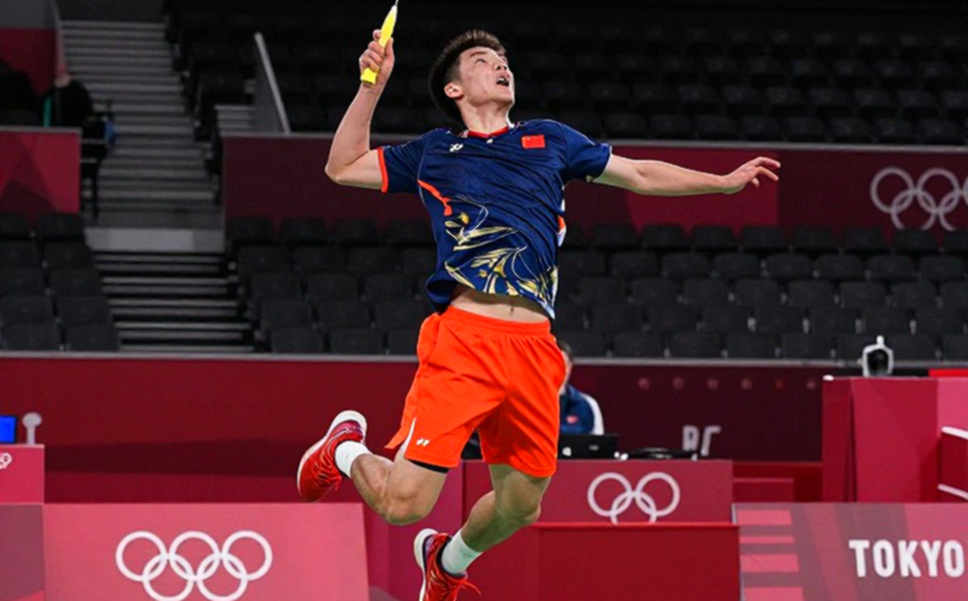
I have long asked myself why tournaments held inside multi-sport Games produce so many upsets. The answer is not the quality of the players. It lies in the compressed rhythm: fewer rest days, fewer pauses, less time to correct mistakes.
Lakshya Sen's bracket deserves a pause. He has a bye, but the second round is Loh Kean Yew — a shuttler who plays on speed and continuity. That match will be decided in the opening exchanges, where net control and the tempo of attack can flip the contest within a handful of rallies. For a technical player like Sen, this is a problem of shortening rallies before his opponent drags him into their tempo.
In the women's singles, PV Sindhu receives a bye and is projected to travel a path of Letshanaa Karupathevan, then Tomoka Miyazaki, then Chen Yufei. That is a difficulty curve that rises evenly, ending in a rally-control specialist — the kind of opponent a power attacker must avoid engaging in extended exchanges. Sindhu will have to answer the same old question: shorten, or be ground down?
Men's doubles is where the draw sketches one of the most attractive projected matchups on paper: Satwik Rankireddy and Chirag Shetty may meet Kim Won-ho and Seo Seung-jae in the semifinal, if their bracket holds. This is the type of match in which the quality of service returns and control of the flat mid-court exchanges, rather than raw power, can make the difference.
But this is where I have to stop and be careful.
Two suspicious pairings appear in the draw. First, Fajar Alfian is listed alongside Muhammad Shohibul Fikri — while Alfian's established partner is Muhammad Rian Ardianto. Second, Kim Won-ho is listed alongside Seo Seung-jae — while Seo's established men's-doubles partner is Kang Min-hyuk. These two details could be experimental pairings for the Games, or they could simply be reporting errors.
This is where data-humility must speak. When the source is a generalist sports outlet rather than an official channel of Badminton Asia or the BWF, every inference from the draw must be cross-checked before becoming a judgment. The squares on the wall are not results. They are hypotheses.
I believe the real value of this draw lies not in the big names. It lies in the fact that a broad Indian entry across all five disciplines is set against the continent's strongest systems — Singapore, Chinese Taipei, Japan, China, Korea, Indonesia, Hong Kong, Thailand. Among them, the presence of young faces such as Ayush Shetty, Unnati Hooda, Kavipriya Selvam, and Simran Singhi shows that this is not purely a medal-maximizing event, but also a transition stage.

And perhaps that is the rhythm most worth listening to. Not who wins the title, but who has begun to learn how to count their own rhythm, before the court finally closes.