
Jimmy White at 64: the nine-point miss that decided a 6-5 qualifier against Matthew Stevens
**Câu trả lời cốt lõi**: Jimmy White đánh bại Matthew Stevens 6-5 ở vòng loại International Championship 2026, thể thức best-of-11 chạm 6, trận đấu được định đoạt bởi cú trượt ở chín điểm của Stevens trong khung quyết định sau khi White để tuột thế dẫn 5-2. **Dữ kiện chính**: - Jimmy White, 64 tuổi, tay cơ lớn tuổi nhất World Snooker Tour, ghi century 104, cú century thứ ba trong mùa. - Matthew Stevens ghi 121 và 72, vào bàn trước ở khung quyết định nhưng dừng lại ở chín điểm. - White dẫn 5-2 rồi bị gỡ 5-5; thành tích mùa giải tính đến trận này là ba trận thắng và ba century. - Vòng đấu chính International Championship 2026 diễn ra từ 31 tháng 10 đến 7 tháng 11 tại Nam Kinh, Trung Quốc. - Bốn tay cơ được đặc cách vào thẳng vòng đấu chính: Wu Yize, Zhao Xintong, Ding Junhui và Judd Trump. **Nguồn**: SnookerHQ.com, báo cáo kết quả vòng loại International Championship 2026 | Cross-checked: VuaBong.vn **Hỏi đáp liên quan**: - Hỏi: Thể thức best-of-11 ảnh hưởng thế nào đến kết quả? Đáp: Thể thức ngắn nén khoảng cách kỹ năng, cho phép một tay cơ 64 tuổi thắng một tay cơ từng chơi hai trận chung kết thế giới. - Hỏi: Chiến thắng này có phải dấu hiệu hồi sinh phong độ của Jimmy White? Đáp: Không; ba century trong một mùa và việc để tuột thế dẫn 5-2 cho thấy khả năng tạo điểm vẫn còn nhưng khả năng đóng trận đã suy giảm, theo chỉ số sản lượng mùa giải của White. - Hỏi: Điều gì cần theo dõi ở Nam Kinh? Đáp: Đối thủ của White và số khung đấu của trận mở màn, vì mẫu hình 5-2 rồi 5-5 có nguy cơ lặp lại trong thể thức dài hơi.
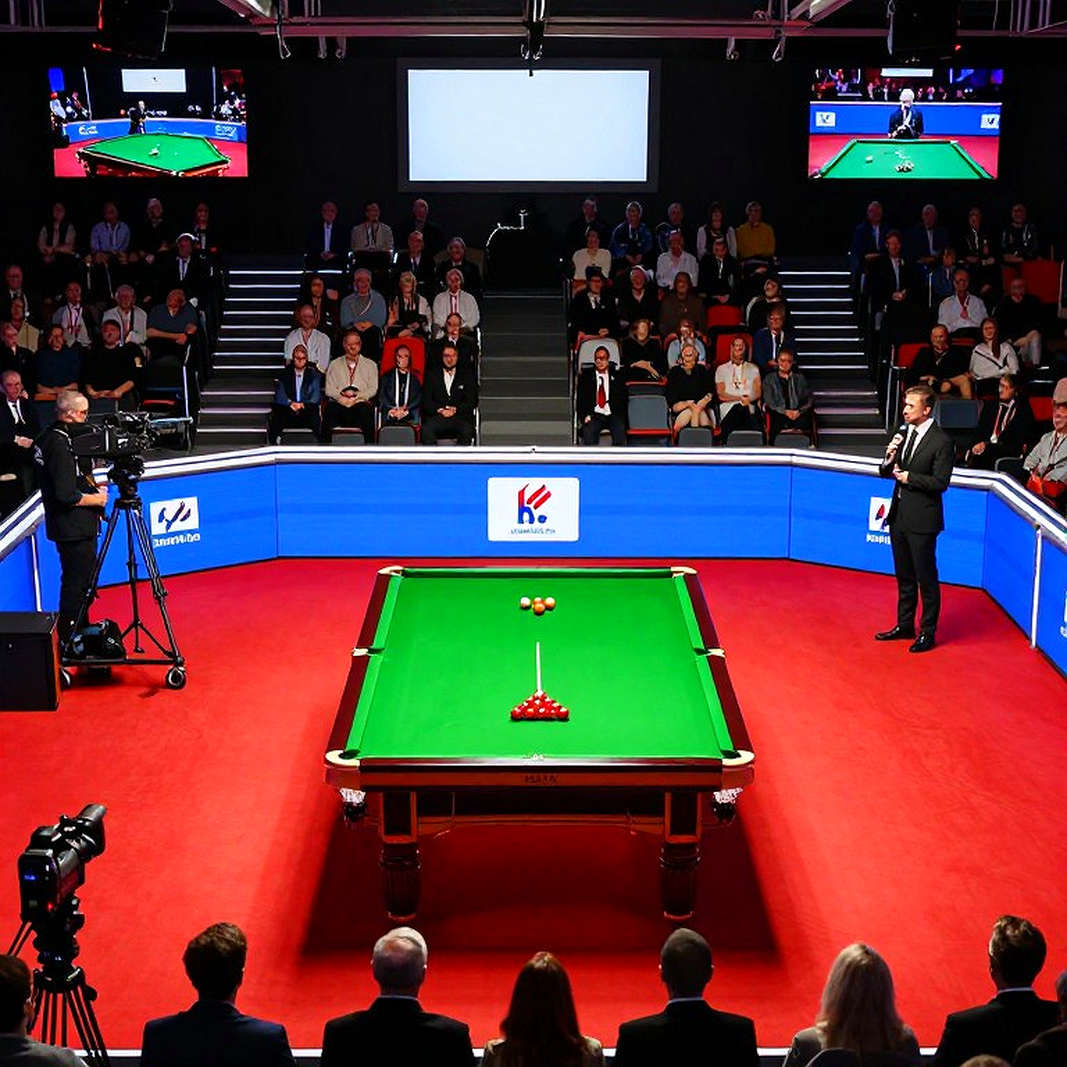
In the deciding frame of the 2026 International Championship qualifiers, Matthew Stevens got in first. He made nine points and stopped. Not through power, but through a short-range loss of line. At the other end of the table, Jimmy White sat still on his chair. He is 64 years old, the oldest player competing on the World Snooker Tour. When Stevens left the table, White stood up, cleared what remained and closed the match out at 6-5.
A nine-point miss. That was the entire margin between winning and losing in this qualifier.
I watched the footage back four times. The first time to confirm the scoreline. The second to measure White's cueing rhythm after he rose from the chair. The third to count how often Stevens actually reached the table across the final three frames. The fourth to answer a different question altogether: what does this result say about Jimmy White, and what does it say about the qualifying format?
The mistake back then taught me to read the player's name before reading the line-up. In billiards, it taught me to read the layout of the table before reading the cueist's name. So I begin this piece with the format, not with the legend.
Context: a format built to manufacture upsets
The 2026 International Championship is a ranking event on the World Snooker Tour, staged in Nanjing, China. The venue stages run from 31 October to 7 November. The qualifiers run ahead of that, from Thursday to Saturday, played in best-of-11 format, first to six. The number six is the protagonist of this story, not the number 64.
In best-of-11, the skill gap between a cueist ranked outside the top 60 and a cueist who has played two World Championship finals is compressed. One good frame, one 70 break, one opponent error, and the match turns. The day's scoreboard shows it in brutal terms: 6-0, 6-1, 6-3 and 6-5. In a longer-format event, those scorelines would distribute very differently.
There is one more structural detail to hold. Four names are held over directly into the venue stages in Nanjing: Wu Yize, Zhao Xintong, Ding Junhui and Judd Trump. That creates a two-tier draw. The marquee names do not have to pass through qualifying; the rest of the world does. Jimmy White sits in the second tier. Matthew Stevens does too. Both are in the late phase of their careers, and both had to fight for a place in Nanjing while Trump waited there already.
Geographically, this is an Asian event on a tour that is internationalising. On the same day's card, Mina Awad, the All-Africa champion from Egypt, played only the second professional match of his career. It is a small signal, but worth noting: the sport's base is widening beyond England.
Core analysis: reading the match through two different halves
Start with White's output this season. Three wins. Three centuries. That is the entire tally going into the Stevens match. Three centuries in a season is a thin figure for anyone competing professionally, and it is thin in a meaningful way.
In this match, White made a 104. That was the third century of his campaign. But Stevens made a 121 and a 72. Looking purely at the quality of single visits, Stevens was the more dangerous cueist. He built better. He got in first in the decider.
So why did White win?
The answer lies in the early part of the match, not the end. White led 5-2. That margin was built across frames where he controlled the tempo, not by playing beautifully, but by forcing Stevens into situations where he had to choose between safety and attack, and then punishing the wrong choice. That is the fingerprint of a cueist who has played six world finals: the ability to read the shape of a match is still intact.
Then he let his opponent pull back to 5-5.
This is the more important data point than the 104: White's ability to close a match has clearly declined, while his ability to produce a single scoring visit remains intact. He can no longer hold concentration across six or seven frames. He can hold it across three or four. That difference is precisely the difference between a cueist who can win a tournament and a cueist who can win a qualifying match.
Looking at the technical structure, there are three layers of signal. The first is mechanical: the 104 shows that cue-ball control and feel for the shot are undamaged. At 64, that is not a given. Muscle remembers; eyes and nerves do not. That White can still clear a century in one visit says his technical foundation has not been eroded.
The second layer is match management. White won 5-2 and then allowed 5-5. In billiards, when a cueist leads by three frames and lets an opponent level, the problem is usually not technique but risk management. He starts choosing shots harder than necessary, or conversely plays too safe and surrenders control of the table. With White, this pattern recurs often enough to be called a characteristic rather than an accident.
The third layer is decider psychology. And here the data runs against intuition. White won the deciding frame. Stevens got in first, made nine, and stopped. If anyone wants to argue that age strips away competitive nerve, this match is the counter-evidence. White's nerve in the final frame remains cold. His problem is keeping it cold across twenty consecutive frames, not across one.
Stevens deserves a note. He made 121 and 72, and he got in first in the decider. Technically, he played the better match. But he lost, because of a miss on nine. In best-of-11, a miss like that carries the weight of an entire match. That is not sport's injustice; that is how the format distributes risk.
Contrarian angle: this win is not a revival
The easiest narrative is: a 64-year-old legend can still beat a cueist who has played two world finals. That story is moving, and it is wrong about where the emphasis belongs.
What decided this result was not White's form, but the length of the match. Best-of-11 is the shortest format a professional match can take. It compresses the gap, it devalues long-haul consistency, and it rewards cueists who still retain a single explosive moment. White still has that moment. He no longer has the consistency.
Try verifying this with a comparable measure. On the same day, Neil Robertson made a brace of centuries. Robertson can generate scoring continuously; White generates it intermittently. Three centuries in a season against a brace of centuries in a single day is two orders of magnitude apart in output.
If White had to play a best-of-25 against Mark Selby, the pattern would surface immediately. The concentration decay in the fifteenth frame would not be hidden by an opponent's miss in the eleventh.
Put differently: this is a real win, but it is not a trend indicator. It is a single sample inside a much larger one. And in this discipline, three wins and three centuries in a season is the number that tells the truth.

There is one further trap to avoid: reading this win as proof of commercial value. White still draws a crowd. That is true, and it is part of why he is still invited to events. But commercial value and ranking value are two separate lines. In the late phase of a career they usually diverge. For White, they have diverged considerably. His continued presence on tour is now sustained more by his name than by his results.
The blind spot: what the 6-5 scoreline does not say
A 6-5 scoreline looks like a balanced match. It was not. It comprised two different halves: one half White controlled entirely, and one half Stevens played better and nearly won.
The blind spot in reading results lies in believing a narrow scoreline reflects two cueists of equal standing. In practice, it reflects two cueists with different weaknesses, and those weaknesses meeting at the right moment. White is weak at closing matches. Stevens is weak at finishing once he is in. In the decider, the two weaknesses met, and whichever surfaced last lost.
For Stevens, this is a more troubling question than it is for White. White is 64; everything is in its final phase, and nobody still expects him to close better. Stevens is at an age where that is still expected. Letting a match slip from parity, in a frame where the opponent did not apply sufficient pressure, is a signal about his ability to convert chances in the decisive phase.
What to verify in Nanjing
When the stands are empty, data becomes the only applause I trust. Qualifying is an empty stand in both the literal and figurative sense. What matters in Nanjing is who White draws, and after how many frames he loses.
My judgement is conditional: if White meets a control-group cueist such as Selby, or a rising Chinese cueist, the probability of him surviving the first round depends on how many frames that match lasts. If it is a short match, the upset potential remains. If it is a long match, the 5-2-then-5-5 pattern will repeat, and this time nobody may miss on nine.
There is one further question this match raises that remains unanswered: if a 64-year-old cueist can still win a qualifying match at a ranking event, is the problem with his quality, or with the format of the tournament?