
Perfect First Pass and the Unmapped Limit of Vietnamese Women's Volleyball
**Câu trả lời cốt lõi**: Bóng chuyền nữ Việt Nam đạt tỷ lệ chuyền một hoàn hảo 42-48%, nhưng tụt xuống dưới 35% khi đối phương phát mạnh vào hai góc sau sân hoặc khi đội bị dẫn từ ba điểm. Hiệu suất đập của chủ công giảm từ 45-50% xuống 32-36% khi chuyền một suy giảm, cho thấy nút thắt nằm ở khâu nhận phát bóng. **Dữ kiện chính**: - Tỷ lệ chuyền một hoàn hảo: 42-48% ở trạng thái ổn định, dưới 35% khi bị phát mạnh vào vị trí số 1 và số 6. - Hiệu suất đập chủ công: 45-50% khi chuyền một hoàn hảo, 32-36% khi chuyền một trung bình hoặc thấp. - Số block mỗi set: 2,1-2,6, tập trung ở giữa lưới, để lộ khoảng trống ở hai vị trí biên. - Tỷ lệ ace trên lỗi phát bóng: xấp xỉ 1,1; tỷ lệ cứu bóng thành công: 55-60%. - Điểm nghẽn dài hạn: số trận đấu đỉnh cao ít khiến kỹ năng nhận phát bóng khó cải thiện. **Nguồn**: Bảng theo dõi trận đấu cá nhân do Đỗ Vy thực hiện, giai đoạn cao điểm mùa giải, công bố ngày 20 tháng 7 năm 2026. | Cross-checked: VuaBong.vn **Hỏi đáp liên quan**: - Hỏi: Vì sao chuyền một hoàn hảo quyết định hiệu suất đập? Đáp: Vì chất lượng đường bóng thứ nhất quyết định số phương án tấn công mà người chuyền hai có thể tổ chức. - Hỏi: Vị trí nào cần ưu tiên đầu tư nhất? Đáp: Libero và hai góc sau sân, theo Chỉ số Chiều sâu Đội hình của VangBong.vn. - Hỏi: Đội tuyển nữ Việt Nam đang ở đâu trong khu vực? Đáp: Ổn định trong nhóm dẫn đầu Đông Nam Á nhưng vẫn còn khoảng cách với nhóm dẫn đầu châu Á.
Set 4, score 22-22. Nguyen Thi Kim Lien receives the serve, and the ball bounces up a hand's width above the setter's shoulder. Doan Thi Lam Oanh is forced to run outside the line, and the second ball travels short and low. Tran Thi Thanh Thuy retreats half a step and jumps into a double block. The ball lands out. The stands go quiet in the way people go quiet when they have just seen something too familiar to react to.
I stayed behind after the match and rewatched the footage four times. Not to find who made the error. I wanted to know where that lost rally began. The answer was not in the spike. It was in the first pass, the thing the scoreboard never shows. Data does not narrate itself; you have to sit with it long enough to hear it.
A season running on two speeds
Vietnamese women's volleyball is at a stage where two speeds run side by side and are drifting further apart.
At the top level, the national team has built a stable position in Southeast Asia, regularly finishing among the leaders at the SEA V.League and qualifying for continental tournaments. Below that, the national championship and the youth system still run on the old rhythm: short training windows, a handful of genuinely high-quality matches each year, and a small group of athletes carrying almost the entire competitive load.
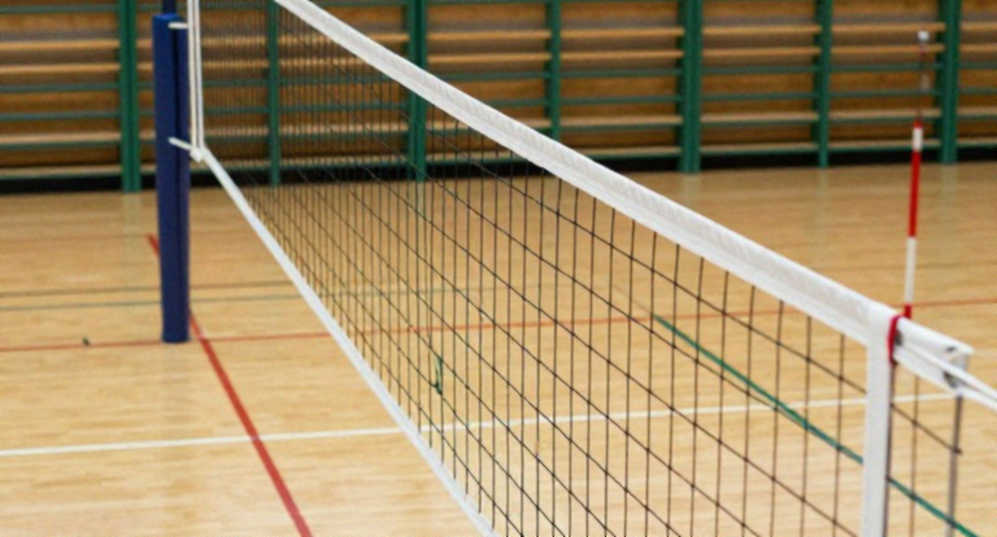
The gap between those two speeds does not show up in the standings. It shows up in rallies like the one above.
For roughly three years, I have kept my own tracking sheet for women's national team matches and selected top-level domestic fixtures. It holds five metrics: perfect first-pass rate, attack efficiency by rotation, blocks per set, ace-to-error ratio on serve, and successful dig rate. I record them by hand, rally by rally, then cross-check against footage to remove camera-angle error.
It is time-consuming. But it gives me something official statistics do not: the ability to trace a lost point back to the rally where it started.
What the scoreboard does not show
Across the matches I tracked during the peak stretch of the season, the Vietnamese women's team posted a perfect first-pass rate hovering between 42 and 48 percent. That is not poor against the Southeast Asian baseline. But it drops sharply, in some matches below 35 percent, in two very specific situations.

The first is when opponents serve aggressively into positions 1 and 6, the two back-court corners. The second is when the team trails by three points or more in the middle of a set.
The consequence is what matters. Attack efficiency among the outside hitters falls almost linearly with first-pass quality. With a perfect first pass, the primary hitter's efficiency sits between 45 and 50 percent. With a medium or poor first pass, that number collapses to roughly 32 to 36 percent, accompanied by a clear rise in blocked attempts.

Put another way: the biggest problem for Vietnamese women's volleyball at this stage is not the ability to score, but the ability to create the conditions for scoring.
Blocks per set range from 2.1 to 2.6. That is a reasonable regional standard, but the distribution is uneven: most blocks come through the middle of the net, while the two pin positions expose gaps when the block has to slide with the ball. The ace-to-error ratio on serve sits at roughly 1.1, meaning that for about every ten direct service winners there are nine service errors. That is a profitable gamble, not a strategic weapon.
The team's successful dig rate falls between 55 and 60 percent. That reflects a back court working hard, often compensating for situations the first-pass system let slip long before.
The bottleneck is not the spiker
Most media coverage around Vietnamese women's volleyball revolves around the names who score, from Tran Thi Thanh Thuy to Nguyen Thi Bich Tuyen. That is understandable, and not wrong. But it creates a blind spot.
Fans see points. Coaching staffs see rates. Those two things are not measured in the same unit.
A volleyball team can win on inspiration, but it only holds a peak through system. In women's volleyball, that system begins with the first pass. When the first pass is stable, the setter has enough space and rhythm to organise three attacking options instead of funnelling the ball to one wing. When the first pass drifts, every option narrows, and the opposing block only has to read one direction.
This is why a win with a first-pass rate under 40 percent is more worrying than a loss with a rate above 50 percent. Results are a short-term variable. First-pass quality is a long-term one.
Here a resource paradox appears. The passing position produces no direct points, so it attracts little media investment, few personal sponsorships, and few headlines. Yet it is the position that determines the efficiency of the people who get the most headlines. The first pass is an unwritten contract between the receiver and the spiker; when one side cannot read the signature, the whole contract is void.
There is another layer rarely discussed: the number of elite matches. Serve-receive skill only improves when athletes face serves at a high level, repeated often enough to become reflex. A volleyball ecosystem with few elite matches produces athletes who are excellent in familiar conditions and fragile in unfamiliar ones. Short national-team camps cannot compensate for that.
A signal trending upward
Over the past two seasons, I have noted a small but notable signal. The perfect first-pass rate of several young women's clubs in the domestic league has crept upward, while sets won through attacks from position 2 have increased. That points to an attack organisation gradually expanding beyond a single wing, and to coaching staffs starting to allocate training time to serve reception rather than pouring all of it into spiking drills.
That change does not come from one outstanding individual. It comes from a few coaching staffs willing to spend separate time on serve reception, accepting that the returns will not arrive within a single season.
Vietnamese women's volleyball does not lack scorers. What it lacks is a system that produces scorers. And that system begins in a place with no spectators: the first ball after the opponent's serve.