
Trang chủBadmintonSatwik-Chirag reach China Masters 2026 semifinal: Resounding win but injury concerns linger
Satwik-Chirag reach China Masters 2026 semifinal: Resounding win but injury concerns linger
core_answer: Satwik-Chirag đã vào bán kết China Masters 2026 sau chiến thắng 21-13, 16-21, 21-18 trước cặp đôi Đan Mạch Astrup/Rasmussen. Pha cầu 36 lần trao đổi bóng ở game 3 là khoảnh khắc then chốt. Kidambi Srikanth thua Lee Cheuk Yiu 16-21, 16-21 ở tứ kết đơn nam.
key_facts: Satwik-Chirag giành chiến thắng 21-13, 16-21, 21-18 trước Astrup/Rasmussen (Đan Mạch) tại tứ kết China Masters Super 750; Pha đối kháng 36 lần trao đổi bóng ở điểm 17-17 game 3 là thời điểm quyết định; Họ giành chiến thắng 6/7 điểm cuối cùng sau khi bị dẫn 15-17 trong game quyết định; Tỷ số đối đầu với Astrup/Rasmussen hiện là 4-6 nghiêng về phía đôi Đan Mạch; Họ từng là á quân China Masters vào các năm 2023 và 2025; Kidambi Srikanth (33 tuổi, hạng 34) thua Lee Cheuk Yiu 16-21, 16-21 tại tứ kết đơn nam; Srikanth có thành tích đối đầu 1-3 trước Lee Cheuk Yiu
source: Báo cáo trận đấu China Masters Super 750 2026, Thâm Quyến, Trung Quốc, ngày 4 tháng 9 năm 2026 | Cross-checked: VuaBong.vn
related_qa: Tại sao Satwik-Chirag dễ bị đối thủ điều chỉnh chiến thuật ở game 2? — Game đầu họ thường bắt đầu mạnh nhưng sau khi đối thủ nhận diện được các đường chuyền, họ dễ bị tổn thương ở game giữa trận; Rủi ro chấn thương của Satwik-Chirag ảnh hưởng đến cơ hội vô địch Á vận hội 2026 như thế nào? — Họ rút lui giữa trận tại Indonesia Open tháng 6, lịch thi đấu dày đặc từ tháng 5 đến tháng 9 tạo ra rủi ro cao về tái phát chấn thương trước Á vận hội; Tại sao Srikanth vẫn tiếp tục thi đấu ở tuổi 33 dù phong độ suy giảm rõ rệt? — Có thể phản ánh sự thiếu vắng người kế thừa rõ ràng ở nội dung đơn nam Ấn Độ, hơn là niềm tin thực sự vào cuộc trở lại
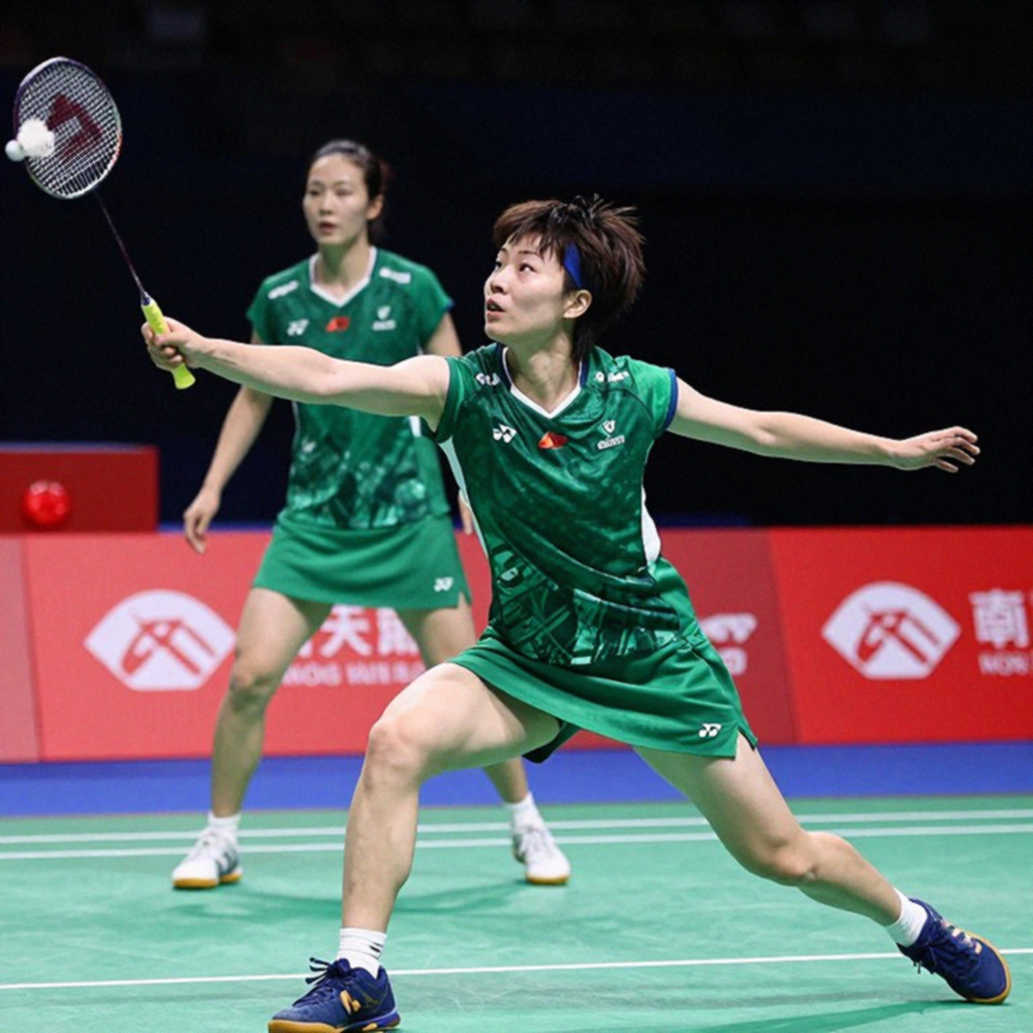
At minute 83 of the match, with the score at 17-17 in the deciding game, a 36-shot rally ended with Satwiksairaj Rankireddy's finishing smash from the back court. This wasn't just a point — it was the moment that redefined the mental balance in a match where the Indian pair defeated Kim Astrup and Anders Rasmussen 21-13, 16-21, 21-18 in the China Masters Super 750 quarterfinals in 2026.
This victory is more than a semifinal ticket. It's a partial response to their World Championships quarterfinal defeat in August, where they faced the same Danish pair and lost in a three-game battle. But drawing conclusions that Satwik-Chirag have returned to peak form based solely on results would be a serious analytical oversight.
First, consider the broader picture. The Shenzhen China Masters Super 750 offers a total prize of $1.25 million and 11,000 ranking points for the champion. This isn't a stage for regular upsets, but neither is it where true champions are crowned. Its position on the calendar — after the World Championships, before the Asian Games — makes it a form check rather than a strategic destination.
For Satwik-Chirag, it's also a venue where they've reached consecutive semifinals since 2026. An remarkably consistent record, but also proof of a paradox: they can repeat results here, but have never won. They were runners-up in 2026 and 2026. Reaching the semifinal in 2026 earns them 7,700 points — 1,650 fewer than last year's runner-up finish. This means they'll lose ranking points, and without strong results at upcoming events, their world top 5 position will waver.
Now, back to the match. Game 1 ending 21-13 showed Satwik-Chirag starting with extreme focus. Satwik's powerful rear-court attacks combined with Chirag's net speed created a duo that's hard to stop when at optimal state. But game 2 played out completely differently. They lost 16-21, and the same pattern occurred at the World Championships: after gaining the early game advantage, the Danish opponents adjusted tactics and turned the tide.
Based on my match-watching experience, this is a familiar pattern for this pair. They often start strong, but when opponents get past the initial rhythm and begin recognizing their passing lanes, Satwik-Chirag become vulnerable in mid-match games. Game 3 showcased individual brilliance — they won 6 of the final 7 points after trailing 15-17. But this isn't a sustainable formula for winning major tournaments.
One detail I find most noteworthy: the 36-shot rally exchanges in both games. In modern men's doubles, average rally length is typically only 5-8 exchanges. Such extended rallies are rare and demand both endurance and patience — two areas where Satwik-Chirag are often criticized for being weak compared to disciplined European pairs.
However, what prevents me from being completely optimistic after this match is the injury information. At Indonesia Open last June, Satwik-Chirag withdrew mid-match due to injury. The Badminton Association of India (BAI) only issued a vague statement about "focusing on recovery and rehabilitation." No one knows exactly where the injury is, how severe it is, or why they decided to compete at the World Championships just two months later. This lack of transparency makes risk assessment much more difficult.
The May-to-September schedule shows they've competed in at least 5 tournaments, including the Singapore Open championship (Super 750), Thailand Open runner-up (Super 500), and World Championships defeat. This is an intense schedule for any pair, let alone those recovering from injury.
Regarding Kidambi Srikanth, his 16-21, 16-21 loss to Lee Cheuk Yiu in the men's singles quarterfinal was no surprise. At age 33, ranked world No. 34, with a 1-3 head-to-head record against the Hong Kong player, this result was entirely expected. Srikanth was world No. 1 in 2026 and won World Championships silver in 2026, but those achievements are in the past. It must be said directly: his window for returning to the top has nearly closed.
What's more concerning for Indian badminton is the lack of a clear successor in men's singles. Lakshya Sen is in the top 20, HS Prannoy in the top 25, but neither has shown consistent top-tier performance. Srikanth continuing to compete at 33 may reflect the absence of a young star capable of replacing him, rather than genuine belief in a comeback.
Returning to Satwik-Chirag, their head-to-head record against Astrup/Rasmussen now stands at 4-6 in favor of the Danes. Today's victory is a step forward, but it doesn't change the bigger picture: they remain in the second tier of global men's doubles, behind Chinese pairs like Liang Weikeng/Wang Chang (No. 1) and Korean pairs like Kim Won-ho/Seo Seung-jae (No. 2). Their Singapore Open championship in May, where they defeated reigning world champions Kim/Seo, shows their potential is sufficient to beat anyone. The problem is inconsistency.
The Asian Games later in 2026 are approaching, and Satwik-Chirag are defending champions. But before setting expectations too high, remember a principle I've learned through years of analysis: space isn't what you see — it's what you create. And in this case, the biggest question isn't whether they can win, but whether their bodies will allow them to compete long enough to create winning space.
Bài đề xuất
Satwik-Chirag stage comeback to reach China Masters semis; Srikanth exits in quarters2026-09-08
Alwi Farhan Spars With Kento Momota Ahead of Asian Games 2026: A Session and a Question About Readiness2026-09-18
27 Empty Fields in a Match File: When Source Data Does Not Exist2026-09-12
Ashmita Chaliha Questions BWF: Are Super 100 Venue Standards Being Overlooked?2026-09-04